
Horsforth is a suburban town in north-west Leeds with a strong connection to parks, woodland, open countryside and historic landscapes. Its position above the Aire Valley gives the area a varied outdoor setting, combining community parks, wooded hills, public footpaths and countryside routes.
- Which Horsforth outdoor places are best for a peaceful morning?
- Why is Horsforth Hall Park suitable for a quiet morning?
- What makes Hunger Hills Wood a peaceful morning destination?
- Where can you walk around Horsforth for longer morning views?
- Which Horsforth green spaces work for a short morning break?
- How should you plan a peaceful morning outdoors in Horsforth?
- Why are Horsforth’s green spaces important for wellbeing and local tourism?
- What is the best peaceful morning location in Horsforth?
For visitors seeking a calm morning outdoors, Horsforth offers several practical options without requiring a long journey from Leeds city centre. Leeds is approximately six miles from Horsforth Hall Park, while Horsforth itself has established transport links and local walking routes. Leeds City Council identifies Horsforth Hall Park as a community park, while Hunger Hills Wood provides a more natural woodland environment.
The definition of a peaceful outdoor morning is straightforward: a period spent walking, sitting, observing nature or enjoying open space away from intensive urban activity. Horsforth is particularly suitable because its green spaces range from landscaped gardens to woodland and countryside.
Leeds has a substantial network of public green spaces. The council’s Parks and Green Spaces Strategy records around 45 million adult visits to Leeds parks each year, demonstrating the importance of outdoor recreation across the city. Research also found that 91% of surveyed residents had visited a park during the preceding year.
The best Horsforth locations for a quiet morning differ in character. Horsforth Hall Park provides maintained paths, gardens and open grassland. Hunger Hills Wood offers woodland and historic features. The surrounding countryside provides longer walks and wider views. Smaller recreational spaces provide alternatives when a short local walk is more appropriate.
Which Horsforth outdoor places are best for a peaceful morning?
Horsforth Hall Park, Hunger Hills Wood, surrounding countryside footpaths and quieter recreation grounds provide the strongest options for calm mornings, with different levels of woodland cover, open space, accessibility, facilities and walking distance.
The most established starting point is Horsforth Hall Park. Leeds City Council describes it as a large community park approximately six miles north-west of Leeds city centre. Its facilities include scenic walks, a cricket pitch, a Japanese garden, a trim trail, a skate park and several play facilities.
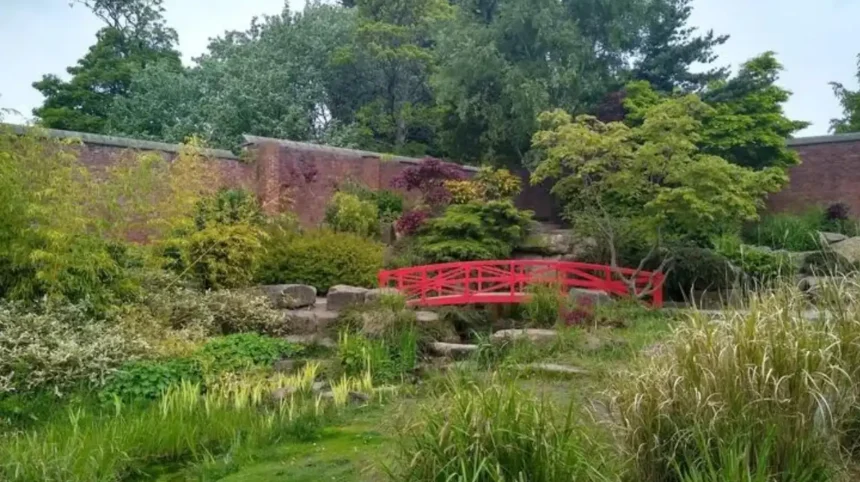
For a quieter experience, the Japanese garden and landscaped areas provide a more contained environment than the sports and play facilities. The park also has paths suitable for wheelchair users, wheelchair-accessible entrances and two disabled parking bays in the main car park off Hall Lane.
Hunger Hills Wood provides a different experience. The Woodland Trust records the woodland at 6.96 hectares, equivalent to approximately 17.19 acres. It is owned by Leeds City Council and sits on the edge of Horsforth.
The woodland is locally associated with bluebells during spring. Leeds Trinity University also records its community importance and explains that the woodland was donated to the people of Horsforth by the Stanhope family in the 1940s.
The surrounding Hunger Hills landscape adds another option for morning walking. Leeds planning documentation identifies Hunger Hills Woods, surrounding fields and connecting footpaths as an important green area. The main path through the woods forms part of the Leeds Country Way, a long-distance walking route around Leeds.
Smaller local recreation grounds provide another solution. Leeds City Council’s parks byelaws list King George’s Playing Fields, Cragg Hill Recreation Ground and Stanhope Recreation Ground among Horsforth’s recreation grounds. The same council information identifies several local green spaces, including Hall Lane, The Green and Newlay POS.
The choice depends on the type of morning planned. Hall Park suits a short, structured visit. Hunger Hills suits woodland walking and nature observation. The countryside around Hunger Hills suits longer walks and open views. Smaller recreation grounds suit brief outdoor breaks.
Why is Horsforth Hall Park suitable for a quiet morning?
Horsforth Hall Park combines open grassland, scenic walking paths, a Japanese garden, mature vegetation and historic features within an established community park, giving visitors several spaces for walking, sitting and enjoying the outdoors.
Horsforth Hall Park is the most accessible dedicated green-space option in the area. Leeds City Council lists it as a community park and provides its address as Hall Lane, Horsforth, LS18 5JE.
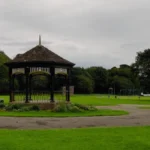
The park’s size and layout create different outdoor environments within one destination. Open grass areas provide space for walking and sitting. Tree-covered sections provide a more enclosed setting. The Japanese garden offers a landscaped environment. The cricket pitch creates a large open visual area.
Morning visitors can use the paths for a short walk before continuing into Horsforth. The council specifically lists scenic walks among the park’s attractions. Its paths are suitable for wheelchair users, and all entrances are wheelchair accessible.
The Japanese garden is particularly relevant for visitors looking for a quieter part of the park. Leeds City Council’s dog control information states that dogs must be kept on leads within the Japanese Garden. Visitors should therefore follow the local restriction when using this section.
The park also contains important historical features. Historic England lists the Horsforth Hall Park war memorial at the junction with Fink Hill as Grade II listed. The memorial dates from 1920, with additions made in 1947.
The park’s historic landscape extends beyond the memorial. A Leeds conservation appraisal explains that the present grounds reflect the setting of the former Horsforth Hall, constructed between 1699 and 1707. The hall was demolished during the early 1950s, while elements of its former estate remain visible in the park.
A Grade II listed stable block associated with the former Horsforth Hall also survives. Historic England dates the stable block principally to the later eighteenth century and notes a datestone from 1707.
As you explore the modern parkland, you are crossing land with a deep heritage. Read the full to understand its origins.
Horsforth Hall Park therefore works particularly well for visitors who want outdoor recreation without leaving the built-up part of Horsforth. Its combination of paths, gardens, grassland and heritage features supports a flexible morning itinerary.
What makes Hunger Hills Wood a peaceful morning destination?
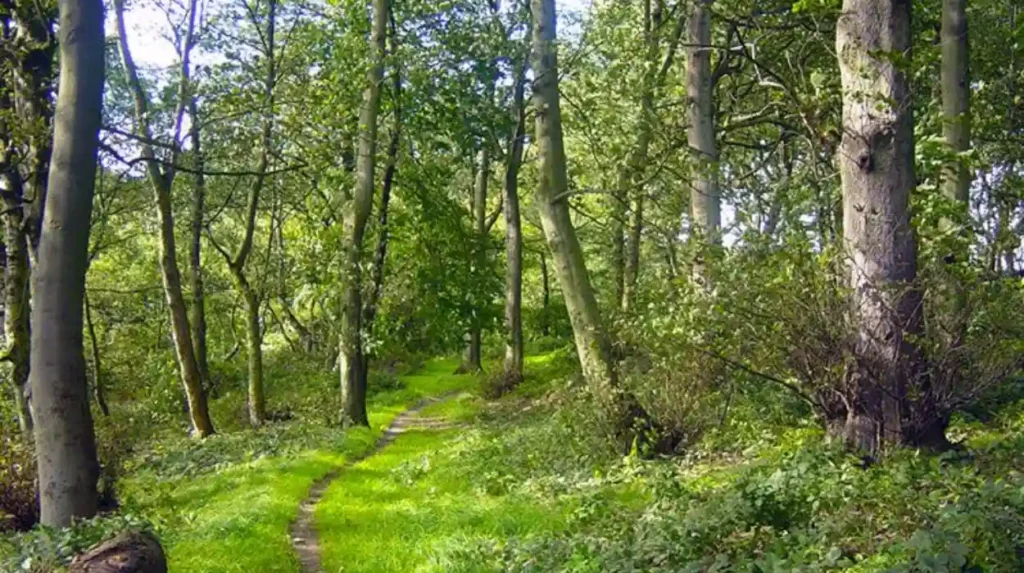
Hunger Hills Wood provides a compact woodland setting with established trees, footpaths, wildlife habitat, historic mining remains and elevated ground, creating a natural environment for quiet walking and nature observation close to Horsforth’s residential areas.
Hunger Hills Wood is one of the area’s most distinctive natural spaces. The Woodland Trust records its size as 6.96 hectares and identifies it as Leeds City Council woodland.
The woodland’s landscape has a strong historical connection with local industry. The name Hunger Hills derives from the Old English or Norse word “Hangra”, associated with a wooded hillside. The woodland also contains evidence of former coal extraction.
Leeds planning records provide further detail. The Hunger Hills area contained coal, ganister and fireclay workings. The council’s neighbourhood planning documentation records 26 of Horsforth’s 37 shallow and deep bell coal mines in the Hunger Hills area.
Bell pits were early forms of shallow coal mining. Miners excavated shafts into coal seams and worked outward from the bottom. Spoil from these workings created distinctive mounds and depressions. Some of these features remain visible in the woodland.
The woodland also has a deliberate historic planting story. The Woodland Trust records that in 1785 W S Stanhope of Horsforth Hall planted 3,000 saplings to create a scenic woodland bridleway and disguise mining earthworks. The planted landscape later developed into the woodland known as Hunger Hills or the Bluebell Wood.
The Leeds neighbourhood plan identifies former bell mines and quarry remains as heritage assets. It also records elevated spoil heaps and long-distance views from Hunger Hills Wood towards the surrounding landscape.
For a peaceful morning, the woodland is suited to slow walking rather than fast recreational activity. The tree cover creates a different atmosphere from the open grassland at Hall Park. Visitors can follow established routes, observe vegetation and examine the historic shape of the landscape without needing to travel outside Horsforth.
The woodland also benefits from community involvement. Leeds City Council lists Friends of Hunger Hills Woods as a local volunteer group. The group promotes the woodland and undertakes activities including regular action days.
Leeds Trinity University recorded a 2023 volunteer activity in which 12 volunteers worked with Friends of Hunger Hills Woods to prune hedges and widen a footpath connecting the woodland with a local park.
Spring provides a particularly recognisable seasonal feature because of the woodland’s bluebells. Visitors should remain on established paths and avoid trampling woodland vegetation.
Hunger Hills Wood is therefore more than a collection of trees. It combines woodland habitat, public access, local history, community management and remnants of industrial activity.
Where can you walk around Horsforth for longer morning views?
The Hunger Hills countryside, Leeds Country Way and connecting public footpaths provide longer morning walks than Hall Park, combining woodland, fields, elevated viewpoints and connections towards surrounding parts of north-west Leeds.
Horsforth’s countryside setting creates opportunities for longer outdoor mornings. The area around Hunger Hills contains fields, woodland and public footpaths that connect different parts of the local landscape.
The Leeds Country Way is particularly relevant. Leeds City Council’s Horsforth design statement confirms that the main path through Hunger Hills Woods forms part of the Leeds Country Way. The same document describes the surrounding fields and woodland as popular for walking.
The Leeds Country Way is a long-distance circular walking route around the city. Its presence gives Horsforth visitors access to a wider recreational network rather than an isolated park path.
The Hunger Hills landscape also provides elevated views. Leeds planning documentation records long-distance views from the woodland and surrounding elevated areas, particularly towards the south-west.
This makes the countryside particularly useful for visitors who prefer walking rather than sitting. A morning route can begin near the built-up part of Horsforth before continuing through woodland and open fields.
The landscape has agricultural as well as industrial heritage. Leeds planning documents record historic farms around Hunger Hills and West End. Some nineteenth-century farmhouses and farmworkers’ or miners’ cottages remain in the wider area.
Public rights of way are important because countryside access follows defined routes. The Leeds Local Access Forum was established in April 2004 under the Countryside and Rights of Way Act 2000. Its role includes advising Leeds City Council and Natural England on countryside access and open-air recreation.
Morning walkers should therefore use recognised public paths and respect private land. Agricultural fields are working environments, so gates should be closed where required and livestock should not be disturbed.
The countryside option is best for visitors who have at least an hour available. A shorter visit is better served by Hall Park or the woodland itself.
Weather also affects the practical character of countryside paths. After heavy rain, ground conditions become wetter and footwear with suitable grip is appropriate. During dry conditions, longer walking routes become easier to manage.
The countryside surrounding Horsforth also connects the town’s green spaces into a broader landscape network. This creates an important distinction between a single park visit and a longer morning walk.
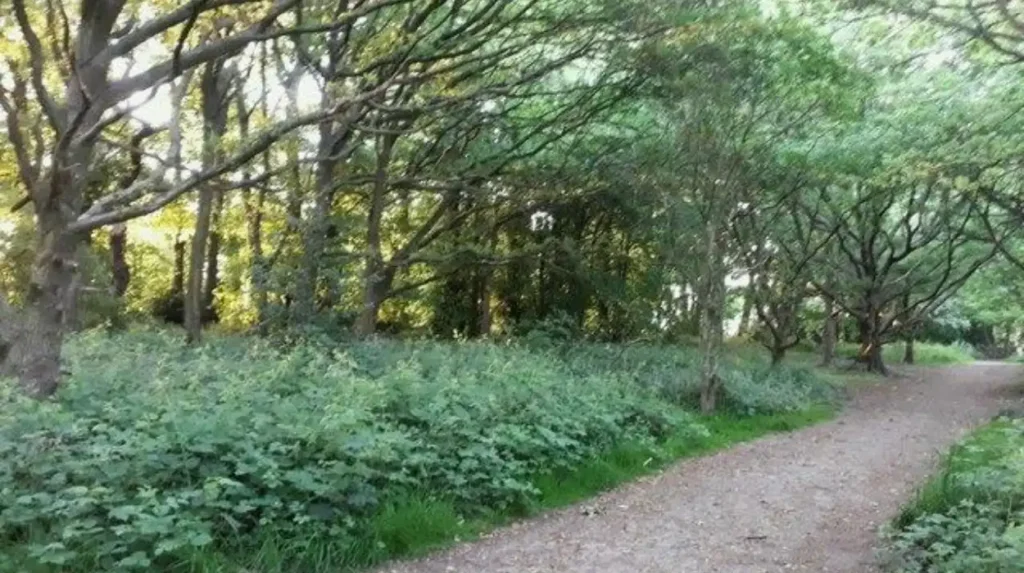
Which Horsforth green spaces work for a short morning break?
Smaller recreation grounds and local green spaces provide practical alternatives when visitors have limited time, with Horsforth’s council-listed sites including King George’s Playing Fields, Cragg Hill Recreation Ground and several neighbourhood green spaces.
Not every peaceful morning requires a long walk. Smaller green spaces provide convenient options for visitors staying locally or taking a short break between other activities.
Leeds City Council’s official parks information lists King George’s Playing Fields and Cragg Hill Recreation Ground among Horsforth’s recreation grounds. Stanhope Recreation Ground is also included. The council separately identifies local green spaces including Hall Lane, Layton Avenue, Leeds Road, Newlay POS and The Green.
These spaces have a different function from Hunger Hills Wood. Recreation grounds generally provide more open and managed environments, while woodland areas provide greater tree cover and natural habitat.
King George’s Playing Fields is classified by Leeds planning documentation as an outdoor sports site. The same planning evidence records it at 7.22 hectares.
For a quiet morning, visitors should select areas away from organised sports activity when possible. The purpose is not to avoid community use but to match the location with the desired level of activity.
Local green spaces are also useful for domestic business travellers. Someone with only 30 to 45 minutes between appointments can use a nearby open space rather than travelling across Leeds to a major park.
This approach reflects wider Leeds park-use research. The University of Leeds-led parks survey found that the average park visit lasted between 30 minutes and two hours. It also found that 69% of park users usually visited the park closest to their home, while 31% travelled to another park.
The findings support the practical value of local green spaces. A peaceful outdoor break does not depend on visiting a major destination. Proximity, accessibility and the type of space are significant factors.
Horsforth therefore provides a useful range of options. A visitor can choose a managed park, woodland, countryside route or smaller recreation ground according to available time.
How should you plan a peaceful morning outdoors in Horsforth?
A successful peaceful morning in Horsforth starts with choosing the right environment, checking access conditions, allowing enough walking time, respecting local restrictions and selecting quieter areas away from organised activities and busy facilities.
The first decision is duration. A 30-minute break suits Horsforth Hall Park or a nearby local green space. A one-hour morning suits Hunger Hills Wood. A longer morning supports a countryside route using the Leeds Country Way and connecting footpaths.
The second decision is accessibility. Horsforth Hall Park has wheelchair-accessible entrances and paths suitable for wheelchair users. It also has two disabled parking bays. Visitors requiring accessible facilities should prioritise the council’s official access information when planning their visit.
The third decision is activity level. Hall Park contains a skate park, playgrounds, cricket facilities and other active uses. Visitors seeking the quietest conditions should use the landscaped garden and walking areas rather than activity zones.
Hunger Hills Wood provides a more natural environment but includes uneven woodland terrain and historic mining features. Visitors should stay on established paths and take care around uneven ground.
Dogs require particular attention. Leeds City Council’s Public Spaces Protection Order identifies the Japanese Garden at Horsforth Hall Park as a location where dogs must be kept on leads.
Visitors should also respect the wider countryside. Public rights of way provide access routes, but surrounding land can remain privately owned or actively farmed.
Early morning timing is another practical consideration. The period immediately after sunrise generally provides a quieter recreational environment than later morning periods when parks and facilities become busier. Exact conditions vary according to the day, weather and organised events.
A simple morning itinerary can therefore follow this structure: begin with a short walk through Hall Park, continue towards Hunger Hills if a longer route is required, and return through established paths before local cafés and town-centre facilities become busier.
Explore More Area Guide
Horsforth Meeting Places & Social Spaces Guide
Horsforth Architecture: Best Places to Visit | Leeds 2026
Why are Horsforth’s green spaces important for wellbeing and local tourism?
Horsforth’s parks and woodland contribute to outdoor recreation, walking, local tourism and community wellbeing, while wider Leeds research demonstrates strong demand for accessible green space and links park quality with visitor satisfaction and perceived quality of life.
The importance of Horsforth’s outdoor spaces sits within a much larger Leeds green-space network. Leeds City Council’s Parks and Green Spaces Strategy records 70 parks across the city and approximately 45 million adult visits annually.
The same strategy records that 88% of park users describe spending time in parks as either essential or important to their quality of life. It also records more than 650 public events in parks each year and more than 2,000 volunteers helping to care for green spaces.
University of Leeds research provides additional evidence. The Leeds Parks Survey found that 91% of respondents had visited a park during the previous year. The estimated number of adult visits across Leeds was approximately 45 million.
The survey also found that 77% of park visitors described their experience as very pleasant and 90% were satisfied or very satisfied with their main park. The research identified fresh air, walking, nature and wildlife, relaxation and thinking among the reasons people gave for visiting parks.
These findings explain why Horsforth’s smaller outdoor spaces matter. Visitors do not always require a nationally recognised attraction. A well-maintained local park or accessible woodland can meet the same basic recreational need: time outdoors within an easily reachable environment.
For tourists, Horsforth also provides a different perspective on Leeds. The area demonstrates how suburban communities retain connections with woodland, historic estates, former industrial landscapes and countryside walking routes.
For residents, the green-space network supports regular walking without requiring significant travel. For domestic business travellers, nearby parks provide practical downtime. For leisure visitors, the combination of natural and historical features creates an additional reason to explore north-west Leeds.
What is the best peaceful morning location in Horsforth?
Horsforth Hall Park is the strongest all-round option for accessibility and facilities, while Hunger Hills Wood is better for woodland atmosphere and longer walks; the surrounding Leeds Country Way provides the best choice for extended countryside exploration.
Horsforth Hall Park is the most straightforward choice for first-time visitors. Its formal facilities, scenic paths, Japanese garden, open areas and accessible entrances create a clear starting point.
Hunger Hills Wood is better suited to visitors who prioritise woodland and natural surroundings. Its 6.96-hectare area, bluebell associations, historic mining remains and connections with local walking routes give it a distinct character.
The countryside around Hunger Hills is the strongest option for longer walking. The Leeds Country Way passes through the woodland, while surrounding fields provide additional open views and walking connections.
Smaller recreation grounds are useful for visitors who have limited time. They provide local outdoor space without requiring a dedicated half-day itinerary.
The overall strength of Horsforth is therefore its variety. Visitors can choose between landscaped parkland, woodland, historic surroundings, recreation grounds and countryside paths within the same local area.
This variety also supports evergreen travel planning. The locations remain relevant across seasons because their core functions do not depend on a single event. Spring highlights woodland flowers, summer provides longer daylight for walking, autumn brings changing woodland conditions and winter provides open views and quieter paths.
For the most peaceful experience, visitors should choose a location based on desired activity rather than simply searching for the largest park. A short morning needs convenient access. A nature-focused morning needs woodland. A walking-focused morning needs connected paths. A mixed cultural and outdoor morning benefits from Horsforth Hall Park’s combination of landscape and heritage.
Horsforth consequently stands out as a practical outdoor destination within Leeds. Its green spaces combine accessibility, history, woodland, open countryside and community facilities. That combination makes the area suitable for calm morning walks, short outdoor breaks and longer recreational routes.
What is the best place for a peaceful morning in Horsforth?
Horsforth Hall Park is the best all-round choice for a peaceful morning. It has scenic walking paths, open grassland, a Japanese garden, mature vegetation and historic features.