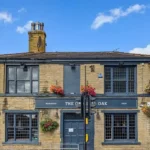
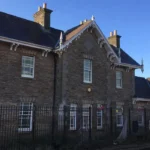
Headingley’s entertainment history reflects the growth of Leeds from a historic village into a busy residential and university suburb. During the early twentieth century, local cinemas transformed leisure activities by bringing silent films, orchestral accompaniment and affordable evening entertainment within walking distance of residents. The opening of the Headingley Picture House in 1912, later known as Cottage Road Cinema, marked an important stage in this development. The Lounge Cinema and nearby Hyde Park Picture House subsequently formed part of the area’s expanding cinema culture.
- How did Headingley develop into an entertainment destination?
- When did the Headingley Picture House first open?
- How did the Headingley Picture House become Cottage Road Cinema?
- What was the Lounge Cinema, and why did it matter to Headingley?
- Which entertainment venues are connected to Headingley’s cinema history?
- How did silent films and early cinema technology shape local entertainment?
- Why did cinema-going become popular in Headingley during the early twentieth century?
- Why did many traditional cinemas close or change their use?
- What can visitors discover about former cinemas through local archives?
- How can visitors explore Headingley’s former cinema locations today?
- How does Headingley’s cinema history remain relevant today?
Although several historic venues have closed or changed their purpose, their stories remain visible through local archives, surviving buildings and cinema equipment preserved elsewhere in Leeds. Exploring these places explains how entertainment habits, technology, population growth and commercial pressures reshaped Headingley over more than a century.
How did Headingley develop into an entertainment destination?
Headingley developed into an entertainment destination as Leeds expanded during the Victorian and Edwardian periods. New housing, shops, improved transport and a growing suburban population created demand for local leisure facilities. Cinemas subsequently joined established pubs, sporting venues and community spaces as important parts of everyday social life.
Historically, Headingley centred on its village green, church, school, manor and public houses. Its position outside central Leeds gave it a distinct identity while allowing residents to travel into the expanding city.
During the nineteenth century, residential development changed the character of the area. Villas, stone terraces and later suburban housing accommodated a growing population. Shops developed along Otley Road and North Lane, creating commercial streets that supported local entertainment.
By the early twentieth century, moving pictures offered a relatively accessible form of leisure. Unlike some established theatrical productions, film screenings allowed venues to show a changing programme of short films, newsreels and feature-length productions.
Cinemas also provided a social setting. Residents visited with family members, friends and neighbours, making local picture houses part of the community’s regular leisure routine.
The development of cinemas in Headingley formed part of a wider transformation across Leeds. According to Leeds Libraries’ historical research, the city had more than 60 cinemas at the height of cinema-going, although the exact number depends on the period and geographical definition used.
This wider cinema network explains why Headingley supported several venues within a relatively compact area.
When did the Headingley Picture House first open?
The Headingley Picture House opened on 29 July 1912 in a building originally constructed as a motor garage. Film pioneer Owen Brooks and his business partner Reginald Smith converted the premises into a cinema with approximately 590 seats, establishing the venue that later became Cottage Road Cinema.
The building had been constructed in 1905 for H. R. Kirk, a Leeds textile merchant associated with nearby Castle Grove. It was not originally designed as an entertainment venue. Its conversion demonstrates how early cinema operators adapted existing commercial buildings to meet growing demand for film screenings.
Brooks was a pioneering film cameraman who produced short news films for audiences in Leeds. His interest in film technology connected local entertainment with the emerging moving-picture industry.
When the Headingley Picture House opened, cinema programmes followed a different format from modern screenings. The venue advertised continuous performances between 6 pm and 10.30 pm on most evenings, alongside matinees on selected days.
Admission was advertised at sixpence, with reserved seats costing one shilling. These historical prices reflected the pre-decimal currency system used in Britain before 1971.
Silent films relied on visual action, title cards and musical accompaniment rather than synchronised dialogue. At Headingley Picture House, a small orchestra accompanied early screenings, providing music that helped establish the atmosphere of the performance.
The cinema became an established local attraction because it combined an accessible location with a regular programme of entertainment.
How did the Headingley Picture House become Cottage Road Cinema?
The Headingley Picture House became Cottage Road Cinema following changes in ownership and refurbishment during the late 1930s. Frank T. Thompson purchased the venue in 1937 before Associated Tower Cinemas acquired it the following year. The business subsequently adopted the Cottage Road Cinema name and continued serving local audiences.
The change formed part of a longer process of commercial development. Cinema owners regularly updated their buildings, seating arrangements and projection equipment to remain competitive as audience expectations changed.
Associated Tower Cinemas added a balcony, increasing the venue’s capacity and altering its internal arrangement. A further modernisation programme in 1972 involved expenditure reported by the cinema’s own history as £20,000.
The venue survived a particularly difficult period in 2005. The Lounge Cinema closed in January that year, and Cottage Road Cinema was also scheduled to close at the end of July. Staff had reportedly received redundancy notices before a last-minute deal enabled Charles Morris to take over its operation.
That intervention preserved a historic cinema building and an established local business. Cottage Road Cinema continues to screen films, maintaining a direct connection with Headingley’s early cinema history.
The venue’s history also illustrates the importance of independent operators in preserving traditional cinemas. Its continued operation provides a contrast with former entertainment buildings elsewhere in Leeds that have been demolished, converted or adapted for unrelated commercial uses.
What was the Lounge Cinema, and why did it matter to Headingley?
The Lounge Cinema was a purpose-built cinema on North Lane that served Headingley during the twentieth century. It formed part of the suburb’s early cinema network, giving residents another place to watch films before closing in January 2005, when changing commercial conditions affected traditional local cinemas.
The Lounge was particularly significant because it operated in the commercial centre of Headingley rather than at the edge of the suburb. North Lane already contained shops and other everyday services, making the cinema part of an established local destination.
Historical photographs of North Lane from 1931 show the Lounge Cinema within the surrounding streetscape. These images, preserved through the Headingley Leeds local-history website and its credited archival collections, help researchers understand how entertainment venues fitted into the area’s commercial landscape.
The cinema’s closure in 2005 marked a major change in Headingley’s entertainment provision. Cottage Road Cinema survived, but the loss of the Lounge reduced the number of traditional cinema venues serving the suburb.
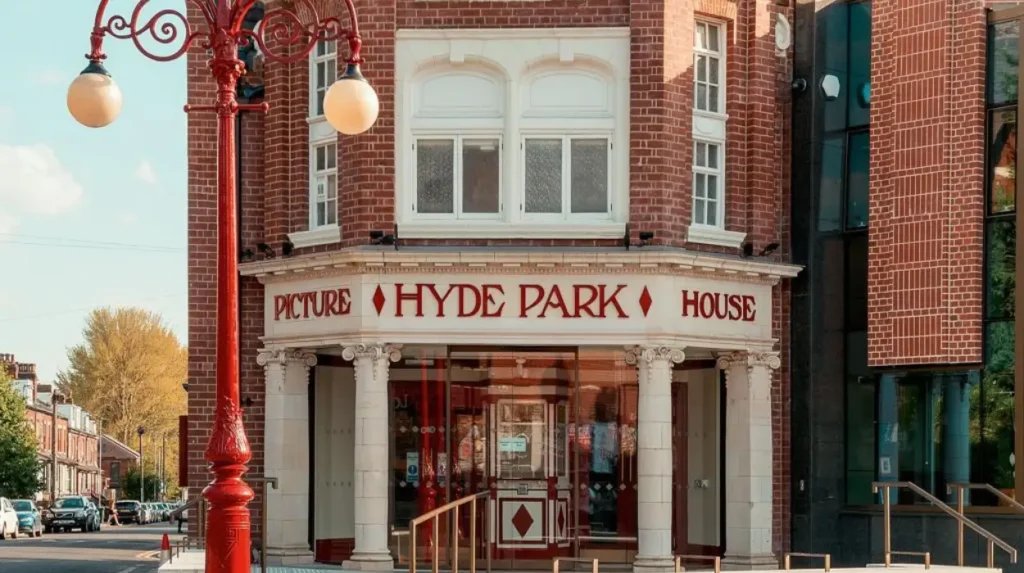
The Lounge also left a physical legacy beyond its original building. Hyde Park Picture House’s historical account records that two Cinemeccanica 35mm projectors from the Lounge were transferred to Hyde Park Picture House after the closure.
These projectors connect the history of two neighbouring cinema districts. They also demonstrate how equipment from a closed venue can remain useful to another institution, preserving part of the area’s technical heritage even when the original business no longer operates.
For visitors interested in former cinemas, North Lane offers a starting point for understanding Headingley’s commercial evolution. Historical photographs are especially useful for comparing the street’s earlier appearance with its modern shops, buildings and pedestrian activity.

Which entertainment venues are connected to Headingley’s cinema history?
Headingley’s entertainment history includes Cottage Road Cinema, the former Lounge Cinema and its wider connection with Hyde Park Picture House. These venues represent different stages of local film culture, from early twentieth-century cinema conversions to purpose-built picture houses and the survival of traditional independent screening spaces.
The distinction between a former venue and a surviving cinema matters when researching local history. Cottage Road Cinema remains operational, whereas the Lounge has closed. Hyde Park Picture House, situated in the neighbouring Hyde Park area, also continues to operate as a historic cinema.
Cottage Road Cinema
Originally called Headingley Picture House, it began in a former garage and remains a functioning cinema. Its history includes silent films, orchestra accompaniment, ownership changes and a threatened closure in 2005.
The Lounge Cinema
The former North Lane venue was an important part of Headingley’s cinema provision. Its closure ended its role as a local picture house, while its projectors later found a home at Hyde Park Picture House.
Hyde Park Picture House
Located in neighbouring Hyde Park rather than Headingley itself, this cinema provides useful regional context. Its historic auditorium and retained cinema equipment help explain how Leeds has preserved elements of its early film culture.
These venues should not be treated as interchangeable. Each had a different location, building history and operating life. Together, however, they show how local cinema-going developed across the connected Headingley and Hyde Park neighbourhoods.
Their histories also help explain why surviving buildings and archived photographs are valuable. A cinema that closes does not immediately disappear from the area’s cultural history. Its original site, equipment, photographs and records can all preserve evidence of its former use.
How did silent films and early cinema technology shape local entertainment?
Early cinema relied on projection equipment, carefully controlled lighting, suitable viewing spaces and musical accompaniment. Silent films used moving images and title cards to communicate stories, while musicians supplied a live soundtrack. Fire-safety requirements also influenced cinema design as film exhibition expanded in Britain.
At the Headingley Picture House, silent-film screenings included musical accompaniment from a three-piece orchestra. This arrangement made the cinema a live entertainment environment as well as a place to view recorded images.
The projection process required specialised equipment. Film passed through a projector in front of a powerful light source, producing moving images on a screen. Early film stock presented significant fire risks, particularly because nitrate film was highly flammable.
The Cinematograph Act 1909 introduced licensing and safety requirements for premises showing films. One important measure involved enclosing projection equipment within a fire-resistant structure. Local authorities subsequently played a role in regulating film exhibitions and their safety arrangements.
These requirements helped establish the separate projection room familiar in traditional cinemas. They also demonstrate that cinema history involves changes in building regulation and technical standards, not simply changes in the films shown.
Sound technology transformed the experience again. Cinemas gradually installed equipment for synchronised dialogue and recorded sound, allowing audiences to hear actors’ voices, music and effects directly from the film.
The Cottage Road Cinema history records a short closure in 1931 to install sound equipment. This transition connected the venue with a nationwide change in cinema production and exhibition.
Later developments included improved projection, sound systems and digital technology. The Lounge’s 35mm projectors, subsequently transferred to Hyde Park Picture House, represent the traditional film-projection era. Their survival illustrates the value of retaining equipment that explains how historic cinemas operated.
Why did cinema-going become popular in Headingley during the early twentieth century?
Cinema-going became popular in Headingley because suburban growth created a concentrated audience for affordable entertainment. Residents could visit local picture houses without travelling into central Leeds, while frequent programmes offered films for different ages and interests. The wider expansion of cinema provision across Leeds reinforced this local demand.
The opening of Headingley Picture House in 1912 came during a period of rapid expansion in film exhibition. A local history leaflet records eight electric theatres in Leeds in 1911 and 31 by 1913. These figures illustrate the pace of growth, although the term electric theatre refers to early cinema venues rather than modern theatrical productions.
Headingley’s residential development helped sustain this expansion. Houses, terraces, shops and public transport supported a neighbourhood with regular demand for leisure activities.
Local cinemas also benefited from repeat visits. Unlike occasional touring attractions, a permanent picture house offered a changing programme in a familiar location. Matinees made screenings available at different times of day, while evening performances suited workers and other residents.
Film programmes changed as the industry developed. Early screenings often included short films and newsreels, while later programmes increasingly featured longer narrative films. The introduction of sound expanded the possibilities for dialogue-driven dramas, comedies and musicals.
The affordability of cinema admission was another factor. Historical prices at Headingley Picture House show that the venue offered tickets at sixpence, with reserved seats at one shilling in 1912. These nominal prices cannot be compared directly with modern admission costs without accounting for changes in wages, purchasing power and the value of money.
Cinema-going also created shared experiences. Families, students, couples and groups of friends used local picture houses for recreation. Their popularity contributed to the social importance of commercial streets such as North Lane and Cottage Road.
Why did many traditional cinemas close or change their use?
Traditional cinemas faced growing competition from television, changing leisure habits, rising operating costs and newer cinema formats. These pressures affected venues across Leeds and Britain, contributing to closures and the conversion of former picture houses into other commercial or community uses during the second half of the twentieth century.
Television changed the relationship between audiences and entertainment. By 1960, almost three-quarters of UK households had televisions, according to Hyde Park Picture House’s historical account. Watching programmes at home became an increasingly important alternative to visiting a cinema.
Cinema operators also faced changing expectations around comfort, sound quality and programming. Larger city-centre venues and later multiplex cinemas offered different facilities and viewing options. Independent neighbourhood cinemas needed to balance the cost of maintaining older buildings with the income generated by ticket sales.
The effects were visible across Leeds. Historical research by Leeds Libraries documents former cinemas that later became bingo halls, shops, warehouses and other commercial premises. Some buildings remained recognisable, while others underwent substantial alteration or demolition.
The Lounge Cinema’s closure in January 2005 provides a local example of this decline. Cottage Road Cinema also faced closure that year, showing that even a longstanding venue with a loyal audience was not immune to commercial pressure.
These changes do not mean that cinema disappeared from Headingley. Instead, the local industry became more concentrated around surviving venues. Cottage Road Cinema continued its programme, while neighbouring Hyde Park Picture House maintained a separate role in the wider Leeds film scene.
Understanding these closures helps visitors interpret the modern streetscape. A former cinema site can retain historical significance even when the building has been converted or removed. Local records provide the evidence needed to distinguish a surviving historic structure from a site whose former entertainment use is no longer obvious.
What can visitors discover about former cinemas through local archives?
Local archives preserve photographs, historical descriptions, advertisements and other records that help visitors identify former cinemas. Leeds Libraries, local-history organisations and cinema institutions provide evidence of opening dates, building changes and entertainment programmes. These resources support research into sites that no longer operate as cinemas.
The Headingley Leeds local-history website includes photographs of North Lane from 1931, including views towards the Lounge Cinema. These images show the venue within its original commercial setting and help researchers compare historical streets with their modern appearance.
Leeds Libraries’ heritage blog offers a wider perspective on the city’s former cinemas. Its research examines the locations of closed picture houses and investigates what happened to their buildings after film screenings ended. This approach treats cinema buildings as part of urban history rather than simply a list of opening and closing dates.
Cottage Road Cinema’s historical leaflet provides another useful resource. It records the venue’s opening, ticket prices, ownership changes and development from its early garage use into a working cinema. Historical cinema programmes also reveal the films audiences watched and the way screenings were advertised.
Visitors researching the subject can use these resources in a practical sequence:
- Start with historical photographs of North Lane and Cottage Road to identify the locations of known venues.
- Compare photographs with present-day street layouts and surviving buildings.
- Check cinema histories for opening dates, name changes, closures and changes of ownership.
- Consult Leeds Libraries and local-history collections for further archival evidence.
- Distinguish documented facts from unverified recollections or assumptions about a building’s former use.
Photographs require particular care. The Headingley Leeds website credits several contributing collections and warns that some images are subject to copyright. Researchers should check the relevant permissions before reproducing archival photographs in articles, social posts or commercial publications.
For a wider understanding of the area, explore the history of Headingley and its development from village to Leeds suburb. This historical background helps connect former entertainment venues with the housing, transport links and commercial streets that supported them.
Explore More Area Guide
Headingley Historic Pubs: Stories Through the Years in Leeds!
Headingley Volunteering & Community Projects Guide in Leeds
How can visitors explore Headingley’s former cinema locations today?
Visitors can explore Headingley’s cinema heritage by combining a walk along Cottage Road and North Lane with historical photographs and published local histories. Cottage Road Cinema remains the principal surviving link to the area’s early picture-house era, while the former Lounge site provides a starting point for researching lost entertainment venues.
A simple walking exploration can begin at Cottage Road Cinema, where visitors can see a building that has presented films since 1912. Its exterior and continued operation provide a direct connection to Headingley’s early twentieth-century entertainment industry.
From there, visitors can investigate the surrounding streets and consult historical records to understand how the neighbourhood developed. The exact walking route depends on the starting point and the sites a visitor wants to include.
North Lane offers a different perspective. Its historic photographs document the Lounge Cinema and the surrounding shops during the early 1930s. Comparing these images with the present street helps explain how commercial uses and building frontages change over time.
Hyde Park Picture House can be included as a neighbouring historical cinema destination. It is not in Headingley itself, but its history and collection of equipment from the Lounge add useful context to the development of cinema in this part of Leeds.
Visitors should distinguish between a former cinema site and a building that retains its original entertainment use. A location associated with a closed cinema does not automatically preserve its original façade, auditorium or internal features.
For a more detailed visit, check the opening information for any operational cinema before travelling. Access to privately occupied former sites should be treated separately from access to public streets and venues open to visitors.
This approach makes a historical walk useful for tourists, local residents, students and researchers. It combines the experience of seeing the area today with the evidence needed to reconstruct its entertainment history.
How does Headingley’s cinema history remain relevant today?
Headingley’s cinema history remains relevant because it documents how technology, urban growth and changing leisure habits shape local communities. The surviving Cottage Road Cinema and records of the former Lounge demonstrate different outcomes for historic entertainment venues, while archived photographs preserve evidence of buildings and streets that have changed.
The continued operation of Cottage Road Cinema gives Headingley a direct connection to the early years of film exhibition. Its history shows that a building originally designed for another commercial purpose can become a lasting cultural institution.
The Lounge Cinema’s closure represents a different outcome. Its original role ended, but its history remains accessible through photographs, written accounts and equipment preserved at another cinema. This distinction illustrates how cultural heritage survives through more than the preservation of buildings alone.
The story also provides a record of broader changes in British leisure. Early cinema offered a new form of entertainment at a time when urban populations and commercial streets were expanding. Television later changed household viewing habits, while digital technology transformed film distribution and projection.
For local researchers, the history of former cinemas also offers a way to study changing neighbourhoods. Historical photographs reveal shopfronts, roads, transport and building patterns. Cinema records add information about businesses, employment, prices and public entertainment.
Future research can build on existing collections by documenting former cinema locations, identifying surviving architectural details and recording memories from people who attended the venues. Such work requires reliable dates, clearly identified sources and careful distinction between evidence and recollection.
Headingley’s former cinemas therefore belong to the wider history of Leeds as well as the story of film. The surviving cinema, the closed Lounge and the records held by local institutions collectively show how entertainment places change while remaining part of a community’s cultural memory.
What was the first cinema in Headingley?
The Headingley Picture House opened on 29 July 1912 in a converted motor garage. It later became Cottage Road Cinema, which continues to operate as a historic cinema in Leeds.