
Travelling around Leeds with a pram requires planning around pavement access, public transport, station facilities and the distance between major destinations. Headingley is a well-connected district in north-west Leeds, with rail and bus links to the city centre and surrounding neighbourhoods.
- What makes travelling around Leeds with a pram easier?
- Which public transport options in Leeds accept prams and pushchairs?
- How do buses work for parents with prams?
- Are trains useful for pram journeys?
- How can families combine buses and trains?
- Is it easy to walk around Headingley with a pram?
- How can parents travel between Headingley and Leeds city centre with a pram?
- What should families consider before travelling into the city centre?
- Is walking the whole way practical?
- What should parents know about accessibility at Leeds transport stations?
- Why should parents check station information in advance?
- How should parents board a train with a pram?
- Which Leeds destinations are easiest to visit with a pram?
- How should parents plan for busy roads and major events in Headingley?
- What are the best practical tips for travelling around Leeds with a pram?
- What is the simplest journey-planning process?
- How does accessible travel benefit the wider community?
- What is the future of pram-friendly travel in Leeds?
For parents, carers and visitors, the practical challenge is not simply choosing a destination. A journey also depends on dropped kerbs, step-free access, available space on buses and trains, accessible toilets and the condition of local walking routes.
Leeds is England’s third-largest city by population, with a large urban transport network serving residential districts, universities, shopping areas, parks and visitor attractions. Headingley sits approximately 2 miles north-west of Leeds city centre and provides a useful base for local journeys.
A pram-friendly journey usually combines walking with public transport. Short routes are often completed on foot, while buses and trains connect Headingley with central Leeds and other parts of West Yorkshire. Understanding how each transport option works helps families avoid unnecessary barriers.
What makes travelling around Leeds with a pram easier?
Travelling around Leeds with a pram is easier when parents choose routes with level pavements, dropped kerbs and suitable transport access. Planning journeys around stops, stations, lifts, space and destination facilities reduces avoidable delays and supports safer, more practical local travel.
The most important starting point is the route between the front door and the transport connection. A bus or train journey can offer good accessibility, but a difficult pavement or a flight of steps at either end creates a barrier.
Headingley has a dense street layout and several busy roads. Otley Road is the main commercial and transport corridor, while residential streets connect to schools, parks, housing and local services. Pavement widths and crossing arrangements vary, so parents benefit from checking the full walking route before leaving.
A pram also changes the practical requirements of a journey. Parents need enough space to manoeuvre, suitable crossings and somewhere to wait safely. Heavy traffic, narrow pavements, street furniture and uneven surfaces can increase journey times.
Leeds City Council is the local authority responsible for many public highways, pavements and pedestrian crossings within the city. Transport infrastructure across West Yorkshire is also supported through regional bodies and transport operators.
Why route planning matters before leaving
A direct route is not always the most suitable route for a pram. A slightly longer journey with controlled crossings, wider pavements and fewer steps can provide a more manageable experience.
Digital journey planners can help parents identify bus stops, railway stations and interchange points. However, users should also check official operator information for current service arrangements, accessibility features and temporary disruption.
Families travelling with babies should allow additional time for boarding, feeding, changing and unexpected stops. This is especially important when travelling to appointments, railway stations or timed attractions.
What should parents take on a local journey?
A practical pram journey starts with essential supplies and a safely packed pushchair. Heavy bags attached to handles can affect stability, particularly when the pram is empty or being moved over uneven ground.
The most useful items depend on the length of the journey. Common examples include nappies, wipes, drinking water, weather protection and a mobile phone with sufficient battery charge.
Parents should also consider the weather. Leeds experiences seasonal rainfall throughout the year, and wet pavements can affect both walking speed and pram handling.
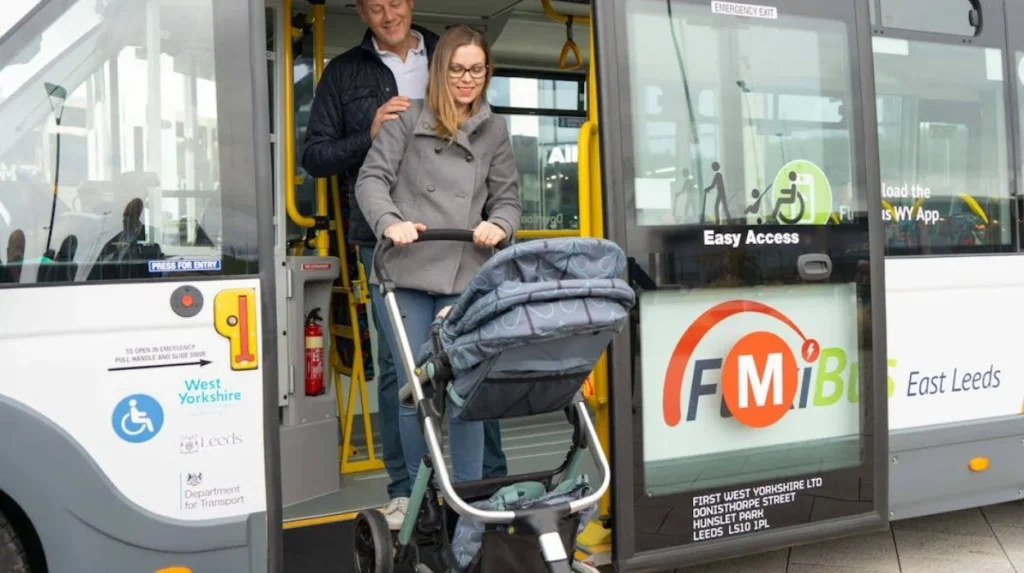
Which public transport options in Leeds accept prams and pushchairs?
Leeds buses and trains provide options for travelling with prams, but space and boarding arrangements differ between services. Parents should follow operator guidance, use designated areas where available and prepare for busy periods when vehicles carry high passenger numbers.
Buses are the main public transport option for many journeys between Headingley and Leeds city centre. Frequent services operate along major corridors, including routes serving Otley Road and nearby areas.
Modern buses often provide low-floor access. A low-floor bus has an entrance close to pavement level, reducing the need to carry a pram up steps. Many vehicles also include a boarding ramp for wheelchair users and accessible passenger areas.
Prams and wheelchairs do not have identical transport requirements. A designated wheelchair space has priority arrangements under operator policies, and parents should follow instructions from the driver when the accessible area is needed.
How do buses work for parents with prams?
Parents should approach the bus stop in a position where they can board safely. The driver can provide access according to the vehicle’s equipment and operating procedures.
Keeping a child secured during travel is an important safety consideration. Operators provide specific guidance about whether prams should be folded or remain open, and this guidance should be checked before travel because vehicle layouts and policies differ.
Busy services create additional challenges. Peak commuter periods, school travel times and major events can increase passenger numbers. Families seeking more space often benefit from travelling outside the busiest periods where their schedule allows.
Headingley also experiences high passenger demand during events at Headingley Stadium. The stadium hosts major cricket and rugby fixtures, increasing activity on surrounding roads and public transport routes.
Are trains useful for pram journeys?
Rail offers another connection between the Headingley area and central Leeds. Headingley railway station is served by local rail services on the route between Leeds and destinations including Harrogate and York.
Rail accessibility depends on the station and train. Step-free access, platform arrangements and boarding conditions should be checked before departure.
Leeds railway station is the principal rail hub for the city. It has extensive passenger facilities and connects local and national rail services. Large stations require extra time because families need to navigate entrances, concourses and platforms.
Parents should check platform information and station accessibility before travelling. Lift availability and planned engineering work can affect the most suitable route through a station.
How can families combine buses and trains?
A combined journey works best when the interchange is simple. For example, a family can travel by bus from Headingley towards the city centre and then continue on foot or by rail.
Each transfer adds time and increases the number of places where access needs to be assessed. Parents should therefore consider whether one direct service provides a more practical option.
Leeds City Bus Station and Leeds railway station are important transport hubs, but they are different facilities with separate entrances and passenger layouts. Families should confirm their final stop before travelling.
Is it easy to walk around Headingley with a pram?
Many everyday journeys in Headingley can be completed on foot with a pram, particularly along established shopping and residential routes. Pavement conditions, road crossings, gradients and street congestion vary, so families should assess each route according to current local conditions.
Walking remains an important part of almost every journey with a pram. Even when families use public transport, they usually walk between homes, stops, stations and destinations.
Headingley has a mixture of busy main roads and quieter residential streets. Otley Road contains shops, cafés, services and bus stops, making it a central route for many local trips.
Parents should pay close attention at junctions and driveways. A dropped kerb is a lowered section of pavement that allows wheeled users, including people with prams, wheelchairs and mobility equipment, to cross between the pavement and road.
Which walking routes are most practical?
The most practical route depends on the destination. Main roads generally provide established pedestrian infrastructure but can also experience greater traffic and pedestrian congestion.
Residential streets can offer quieter conditions, although pavement widths, parked vehicles and surface quality vary. Families should choose routes with safe crossings rather than crossing busy roads at unsuitable locations.
Parks and green spaces can provide useful walking destinations. These spaces often offer room for a pram, although paths can vary between surfaced routes and informal ground.
As you explore the modern area, you are also travelling through a district with a long and changing local heritage. Read about the full [Insert Anchor Text for History Article Here] to understand its origins.
How should parents manage hills and uneven surfaces?
Leeds has varied topography, and some local routes include gradients. A route that appears short on a map can require more effort when pushing a pram uphill.
Parents should use both hands on the pram when navigating slopes and follow the manufacturer’s instructions for brakes and safe use. Loose surfaces, wet leaves and ice require additional care.
Choosing a route with a smoother surface often improves journey reliability. This is particularly important for newborns and young babies who are travelling in a lie-flat pram or carrycot.
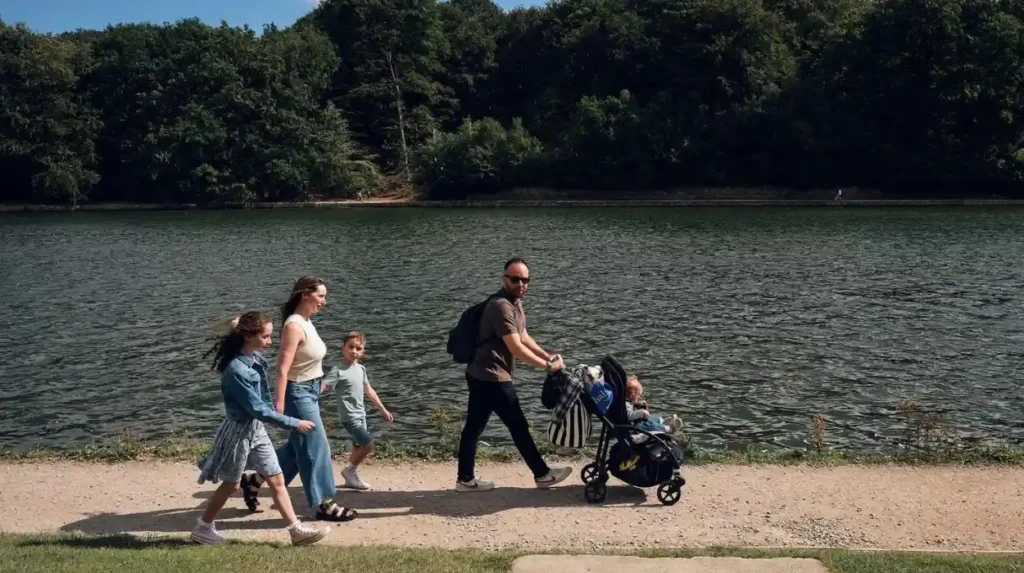
How can parents travel between Headingley and Leeds city centre with a pram?
Parents can travel between Headingley and Leeds city centre by bus, train, walking or a combination of these options. The best journey depends on the starting point, destination, service availability, accessibility requirements and the amount of equipment being carried.
The Headingley-to-city-centre corridor is one of the area’s most important local travel links. Leeds city centre contains major shopping streets, cultural venues, offices, public services and transport connections.
Bus travel is often practical because services operate along main roads and can stop closer to individual destinations than railway services.
Train travel can be useful for journeys that begin close to a suitable station. However, parents should consider the distance between the station and their final destination.
What should families consider before travelling into the city centre?
The city centre has high pedestrian activity. Pavements around major shopping areas and transport hubs become particularly busy on Saturdays, during school holidays and at major events.
A pram-friendly route should account for the final walking distance. Parents travelling to a museum, shopping centre or restaurant should identify the most accessible entrance before starting the journey.
Leeds has several large indoor shopping destinations and public buildings. Entrance arrangements vary, and some buildings have multiple access points.
Is walking the whole way practical?
The distance between central Headingley and Leeds city centre is manageable for some experienced walkers, but it represents a substantial journey when pushing a pram and carrying baby equipment.
Walking the full route requires attention to weather, road crossings and the child’s comfort. A mixed journey using public transport for one section often reduces travel time.
Families should avoid assuming that the shortest mapped route provides the best access. A route with fewer obstacles and safer crossings is often more suitable.
What should parents know about accessibility at Leeds transport stations?
Station accessibility depends on entrances, lifts, ramps, platforms and temporary operational conditions. Parents travelling with a pram should check official accessibility information before departure and allow additional time for navigating large stations, busy platforms and changes between services.
Railway stations are fixed parts of a journey, so their accessibility features have a major effect on route choice.
Step-free access means that a passenger can reach relevant areas without using stairs. This access can involve lifts, ramps or level routes.
Not every route through a station is step-free. Parents should identify the correct entrance and platform before travelling.
Why should parents check station information in advance?
Temporary changes can affect accessibility. Engineering work, lift maintenance and platform alterations can change the usual route through a station.
Official station information provides the most reliable starting point for accessibility planning. Families with specific requirements should contact the relevant operator before travelling.
Leeds railway station is a large and busy transport facility. Parents should allow extra time to move through the station, especially when travelling during commuter periods or connecting between trains.
How should parents board a train with a pram?
Platform and train height can differ. Parents should follow staff instructions and use designated assistance services where appropriate.
Rail operators provide passenger assistance arrangements for people who need help planning or completing a rail journey. Parents travelling independently with a pram can also benefit from checking boarding arrangements before departure.
Keeping bags organised reduces the difficulty of boarding. Loose equipment creates additional obstacles when moving through doors and narrow gangways.
Which Leeds destinations are easiest to visit with a pram?
Pram-friendly destinations are those with practical pedestrian access, suitable entrances and sufficient internal space for families. Leeds offers parks, museums, shopping areas and public attractions, but parents should check individual facilities for current accessibility and baby-changing arrangements.
The suitability of a destination depends on the complete journey, not simply the building itself. A fully accessible attraction still requires a practical route from the bus stop, station or parking area.
Parks are popular destinations for families because they provide outdoor space and established paths. Leeds has major green spaces across the city, including Roundhay Park, one of the largest urban parks in Europe.
Museums and galleries provide indoor alternatives during poor weather. Parents should check opening hours, lift access and baby-changing facilities before travelling.
What should parents check before visiting an attraction?
The most useful information includes entrance access, accessible toilets, baby-changing facilities, parking arrangements and the location of nearby public transport.
Food and drink facilities also affect the length of a family visit. A venue with seating and accessible facilities can reduce the need for additional journeys during the day.
Families should check current opening arrangements directly with the destination. Opening hours and temporary access arrangements change more frequently than the physical location of a venue.
Why are public facilities important?
A journey with a baby often includes practical requirements that do not affect other visitors. Changing facilities, feeding spaces and accessible toilets can determine whether a family can comfortably extend a visit.
Public buildings and larger visitor attractions generally publish accessibility information. Parents should use this information when selecting destinations.
How should parents plan for busy roads and major events in Headingley?
Busy roads and major events can increase pedestrian congestion, traffic and demand for public transport in Headingley. Parents travelling with a pram should allow extra time, use established crossings and check event schedules before making journeys through the area.
Headingley is a major sporting location. Headingley Stadium hosts Yorkshire County Cricket Club and Leeds Rhinos rugby league fixtures, attracting large numbers of visitors.
Event traffic affects roads, pavements and bus services. A journey that normally takes a short time can require longer during arrival and departure periods.
Parents should check local event calendars when planning travel around Headingley. This is especially important for journeys involving appointments or connections.
How can families travel safely on busy streets?
Controlled pedestrian crossings provide designated points for crossing roads. Parents should avoid moving between parked vehicles or crossing where approaching traffic is difficult to see.
A pram should remain under the adult’s control at all times near traffic. Children should be secured according to the pram’s design and manufacturer’s instructions.
Busy pavements also require awareness of other pedestrians. Keeping to the available pedestrian route and avoiding sudden stops at narrow points helps maintain safe movement.
When are public transport services busiest?
Commuter periods commonly create higher demand in the morning and late afternoon. School travel and university term times also influence passenger numbers in Headingley.
Major sporting events create separate peaks. Checking the date and expected start time of an event helps families choose an alternative route or travel earlier.
Explore More Area Guide
Headingley Accessible Bus Travel Guide for Disabled Passengers
Headingley Bicycle Storage: Secure Parking Facilities in Leeds
What are the best practical tips for travelling around Leeds with a pram?
Successful pram travel in Leeds depends on planning the complete route, checking official transport information and allowing extra time. Parents should prioritise safe crossings, step-free access, suitable facilities and realistic journey times rather than relying only on distance.
Preparation makes local journeys more predictable. Parents do not need to plan every minute, but they should know where the main access points and transport connections are located.
Checking the weather is also important. Rain, strong winds and winter conditions affect both walking and waiting at transport stops.
A charged mobile phone provides access to live service information and contact details. Families should also keep essential baby supplies within easy reach.
What is the simplest journey-planning process?
First, identify the exact destination and the most suitable entrance. Second, choose the transport option with the simplest access from the starting point.
Third, check the walking sections at both ends of the journey. Fourth, review official service information for current changes.
Finally, allow extra time. A journey with a pram includes boarding, crossing roads, finding lifts and responding to a child’s needs.
How does accessible travel benefit the wider community?
Pram-friendly streets and transport systems support more than parents with young children. The same features also benefit wheelchair users, older people, travellers carrying luggage and people with temporary mobility needs.
Dropped kerbs, level access and clear pedestrian routes form part of inclusive urban design. These features improve the usability of public spaces across the whole community.
For Headingley and Leeds, continued attention to accessible streets and public transport supports residents and visitors. Families can make better travel decisions when reliable information explains the complete journey from pavement to destination.
What is the future of pram-friendly travel in Leeds?
The future of pram-friendly travel in Leeds depends on accessible transport, safe walking infrastructure and clear journey information. Investment in inclusive design supports families while also improving mobility for disabled passengers, older residents, visitors and people carrying luggage.
Urban transport is increasingly assessed through accessibility as well as speed and capacity. A transport network works effectively when passengers can reach and use services without unnecessary physical barriers.
Leeds continues to develop its transport and public-realm infrastructure through local and regional planning. Future projects need to consider how pedestrians with different mobility requirements use streets, crossings and public transport.
Digital information also has an important role. Accurate updates about lifts, service disruption and accessible routes help parents make informed decisions before leaving home.
For families based in Headingley or visiting the area, the central principle remains straightforward. Plan the whole journey, not only the main transport section. A suitable pavement, a safe crossing and an accessible destination are all essential parts of travelling around Leeds with a pram.
With practical preparation and current information from transport operators and destinations, parents can use Headingley’s local connections to reach Leeds city centre, parks, attractions and everyday services with greater confidence and efficiency.
Can I take a pram on buses in Leeds?
Yes. Many buses in Leeds have low-floor entrances designed to make boarding easier for passengers with pushchairs. Space inside the bus is limited, so parents should follow the driver’s instructions and the transport operator’s guidance.